Interactive Tools

Interactive · Simulation
Preach, Persuade & Pivot
A spatial voting simulation game exploring how candidates navigate coalitions, messaging, and voter persuasion — built at the intersection of game design and formal political theory.
Interactive · Data Dashboard
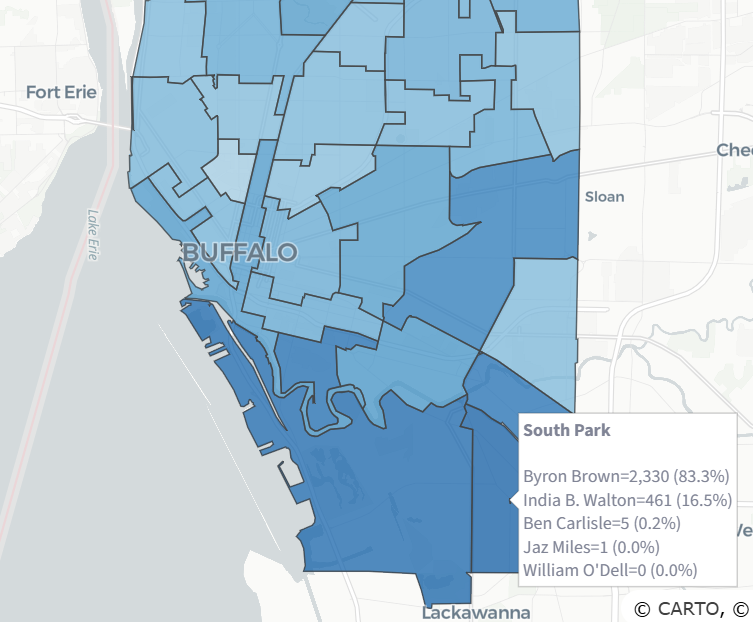
Buffalo Mayoral Election Dashboard
Twenty-five years of Buffalo mayoral results (2001–2025), mapped ward by ward. The dashboard traces Byron Brown's five consecutive victories and the 2021 anomaly at its center: having lost the Democratic primary to a progressive challenger, Brown mounted a write-in campaign — and won his largest margins in the districts where his 2017 opponent had most threatened him.